
Express Entry and Foreign Soldiers
Desperate times, desperate measures?

A new development occurred in the Canadian Armed Forces’ Reconstitution saga, and it cause a bunch of confusion (to yours truly included).
Since Wednesday, February 18, 2026: “skilled military recruits” have become a category under the Express Entry category-based selection.
On paper, this is huge.
In practice? Hmmm.
Shmexpress Shmentry
For those of you who have not had the pleasure to go have to do a ton of paperwork to come live to Canada, let me enlighten you:
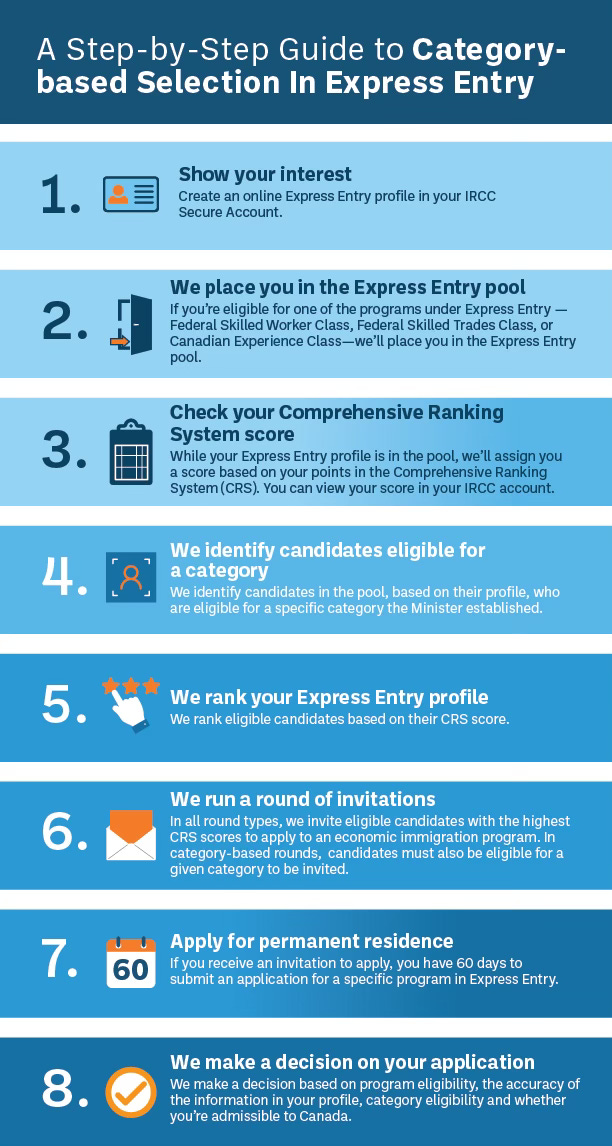
Express Entry is an immigration system to obtain permanent residency to Canada, focused on the management of immigration of “skilled workers.” There are three programs:
They tend to be faster (when everything goes well, and do not ask me about how much it took me). You apply, get a score, get the necessary documents (including a language test, regardless of your country of origin), and then you wait until you are invited by one of the provinces to apply for Permanent Residency.
Within those programs, you now deal with “category-based selection,” which means that applicants in the Express Entry pool receive an invitation based on a “specific category by the Minister to meet an identified economic goal” (emphasis in the original).
The categories, as announced last week, are:
French-language proficiency
Healthcare and social services occupations
Science, Technology, Engineering and Math (STEM) occupations
Trade occupations
Education occupations
Transport occupations
Physicians with Canadian work experience
Senior managers with Canadian work experience
Researchers with Canadian work experience
Skilled military recruits
And before we get into the meat of it all, the website mentions two important caveats:
“Category-based rounds are intended to supplement other round types to meet the identified economic goal.”
“We may not need a category-based round if there are enough top-ranking candidates eligible for a category being invited to apply through general or program-specific rounds.”
Skilled Military Foreign Applicants
Well, the reality is: having foreign service members join the military is not new. It predates the opening of the CAF to permanent residents in November 2022.
What is new, however, is how public it is now.
When the news broke, I remembered meeting in 2018 at CFB Trenton a British officer serving in the RCAF who was about to obtain his Canadian citizenship. Noticing my surprise, he kindly explained that he came to Canada as a permanent resident through a program that led trained service members join the CAF.
But this past Monday night, as I was doing research to help better inform my media commentary, I could not find anything on that program on the inter webs.
That is until I remembered a presentation by Dr. Grazia Scoppio at the 2024 IUS Conference in Ottawa, and that she co-edited a volume in 2022 with Dr. Sara Greco on diversity in the Canadian Armed Forces.1
Turns out, in that volume, Dr. Scoppio and Dr. Greco co-wrote a chapter that spoke to the Skilled Military Foreign Applicant program.
In 2020, Scoppio and Greco asked questions to the Recruiting Group about the Skilled Military Foreign Applicant program.
At the time, the military could enrol service members from foreign countries with specific skills. The intent was “minimize training costs or fill in-demand job openings.” But the CAF can only enrol those members if they met immigration requirements. Most applicants did not meet the IRCC eligibility requirements (mostly due to how the point system functions).
Accordingly, the CAF and IRCC discussed how to overcome this issue, including making changes to the National Occupation Codes in order to give Skilled Military Foreign Applicants the points necessary to get Permanent Residency and come serve in the Canadian military.
From the data Drs. Scoppio and Greco could get, between fiscal year 2016-17 and fiscal year 2019-20, 127 foreign service members applied under the Skilled Military Foreign Applicant program.
Soooo…? Why are we doing this now?
If we follow Drs. Scoppio and Greco’s chapter and the communication they obtained from the Recruiting Group, the timing is rather serendipitous.
We cannot put this change directly on the Reconstitution Directive or what has been going on in the United States (this is my mea culpa and eating my hat for my commentary in The Canadian Press).
That being said, there is a point to doing this. That point is to get trained service members in the CAF, at a time when the number of trained aviators, sailors, and soldiers is decreasing (despite an overall growth in the total number of service members). This could save money and time for the military during a readiness crisis.
To me, that is a policy that makes sense.
A military full of foreigners??!!
Eh.
I think there is a fear here around security risks. But given how the security clearance process goes for permanent residents applying to join the military (i.e., all of them have to be assessed as if they had come from a high-risk country, regardless of origins), I do not think the CAF is running a huge risk here.
Where I am intrigued is around the question of obtaining top secret clearance. In recent years, Treasury Board put out a new policy making citizenship a requirement for those higher levels of clearance. If we try to get fighter jet pilots, this might be a bit difficult to iron out.
Further, let us not expect foreign service members to flood the CAF. As stated earlier, there were only 127 applicants to the Skilled Military Foreign Applicant between April 2016 and April 2020. Unfortunately, I do not know how many ended up joining the Canadian military.
But…?
There’s always a “but” here at DND/CAF101.
Where I am most concerned is about integration and culture. How do we intend on socializing these new members into the CAF, ensuring that the new addition to the military is aligned in terms of doctrine, values, and ethics?
There is this belief that military culture is military culture and variations are few and far between, but that is not always the case. Making sure that integration is adequate will be essential; for the well being of these new service members but also for those working with and around them.
In the end
As with everything: we’ll see. I think this policy makes sense and is worth a shot.
Grazia Scoppio and Sara Greco, eds, The Power of Diversity in the Armed Forces": International Perspectives on Immigrant Participation in the Military (Montreal and Kingston: McGill-Queen’s University Press, 2022), https://www.mqup.ca/Books/T/The-Power-of-Diversity-in-the-Armed-Forces
I had a Sgt-Maj who joined the CAF through this (or a similar) program. He was in the Britsh Army for 25 years, retired, and was able to join the CAF as a WO (I think he was a Colour Sgt in the UK, which would have been equivelant to an MWO so he did have to take a rank reduction). All that to say it's a great program for allied nations with similar training standards.